Wednesday, November 11, 2015

Ma'nene Ritual - Corpse Cleaning Part II

For every three years, in a bizarre ritual which dates back hundreds of years, islanders pay respects to deceased relatives by digging them up, cleaning their corpses and dressing them in their favourite clothes. For the Torajan people, an ethnic group indigenous to the mountainous region of Tana Toraja, the Ma'nene festival is a celebration of life. The Ma'nene festival, translated to 'the Ceremony of Cleaning Corpses', see the dead exhumed, groomed and dressed. It is a mark of respect to strengthen bond between life and death. Their coffins are replaced or fixed while relatives parade them around the village, following a path of straight lines. They believe the paths connect them with Hyang, a spiritual entity with supernatural power that only moves in straight lines. The vast majority of the 650,000 Torajan people are Christian or Muslim but a small number still practice 'Aluk Todolo', or 'the Way of the Ancestors'. The funeral ritual is one of the most important and expensive events for these communities and some Torajans save money their entire lives for a decent burial.  


 All photos credit: Agung Parameswara

You can find other pages on this topic here, here and here

Monday, November 9, 2015

Skull Blessing in Bolivia Part II

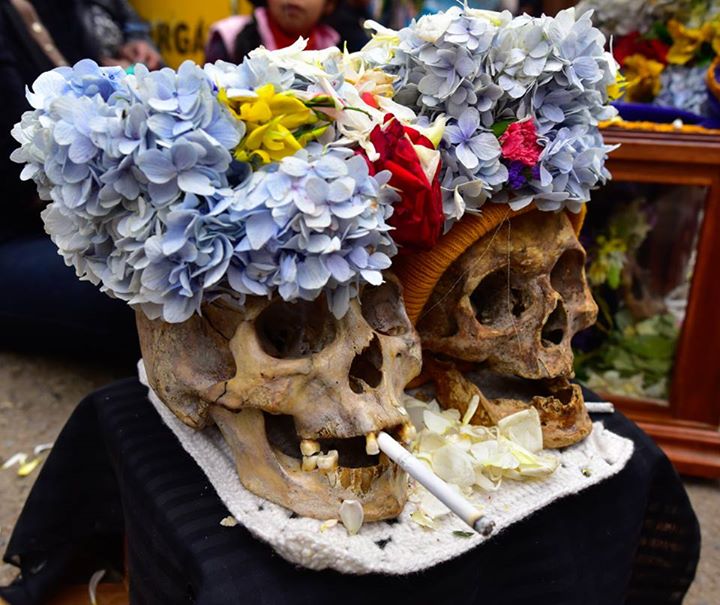
The Day of the Skull takes place every year in Bolivia on November 8. They are decorated and taken to a cemetery in La Paz a week after All Saints Day. The skulls are cared for by the faithful who believe they give them protection. Some  skulls are handed down through generations but many are taken from abandoned graves. The human skulls or 'natitas' are displayed outside the Cementario General chapel in La Paz, Bolivia. They are surrounded by offerings of coca leaves, flower petals and cigarettes. Many of the human skulls on show are kept in people's houses during the year, and dusted off for the big day. They receive blessings and are decorated with offerings. 


Photo credit: Paul Koudounaris

Photo credit: Paul Koudounaris

Photo credit: Paul Koudounaris

Photo credit: Paul Koudounaris

Photo credit: Paul Koudounaris

Photo credit: Paul Koudounaris

Photo credit: Paul Koudounaris

Photo credit: Paul Koudounaris

Photo credit: Paul Koudounaris

Photo credit: Paul Koudounaris

Photo credit: Paul Koudounaris

Photo credit: Paul Koudounaris

Photo credit: Paul Koudounaris

Photo credit: Paul Koudounaris

You can see Part I here

Tuesday, October 27, 2015

Rattlesnake Bite

Country music star Kevin Fowler has shared gruesome pictures of a friend's snakebite injuries. In one photo, a huge, grey blister has formed that almost covers the man's entire palm and half of his fingers. A second picture shows the bloody aftermath of the blister being popped, with pus oozing out of the wound.

Rattlesnake bites aren't fatal if treated quickly and effectively but they can cause nasty injuries. An estimated 7-8,000 people are bitten by venomous snakes every year in the USA, with about five deaths occurring each year. If an antidote is given within two hours of the bite, there's a 99% chance of survival - most deaths occur between six and 48 hours of the bite.


Other snakebite posts here, here and here

Saturday, October 17, 2015

Haitian Voodoo Rites

Voodoo is one of the most misunderstood religions. Rituals involving animal sacrifices and its associations with skeletons and possession have given it a sinister reputation.  But New York photographer Les Stone sees it as a fascinating practice. He has been photographing Voodoo followers in Haiti for 25 years and produced incredibly powerful images from over 200 visits.He describes voodoo as 'a huge package of physical sensory overload' and his pictures  - of bulls and goats being bled to death, followers bathing in mud pools and blood-soaked dresses - capture the intoxicating energy of the ceremonies he attended. 

These men, photographed in a commune called Jacmel in southern Haiti, are portraying chaloskas, described by Stone as 'characters in military garb with a protruding mouth and claw-like teeth'. This figure is based on a military officer, Charles Oscar Etienne, who terrorised Jacmel around 1900

The blood of a slaughtered goat has stained the bandanna and clothing of a dancer at the Souvenance carnival of Haitian Voodoo

A worshipper carries a sword in Souvenance during an Easter ceremony where Voodoo rites inherited from their ancestors are celebrated

The Houngan stares into the camera as he licks the blood of a sacrificed animal from his fingers in St Yves

On a street in Port au Prince, during the Day of the Dead a man walks among the crowds with a skull on his head

A woman dressed in blue holds a carton of water in her hand as she lights candles on a cross as a symbol of respect to the spirits

At Plain Du Nord, a Voodoo society holds swords and liquor as they prepare to dance to celebrate and welcome spirits

Goat's blood runs down a woman's face after a sacrifice

A woman holds a candle while in a trance in Plaine Du Nord, Haiti

In St Yves, a Veve (a religious symbol commonly used in Voodoo) is created with flour on the ground preceding a ceremony

In the Plain Du Nord a woman smokes a cigar during the Voodoo ceremony which takes place in and out of the sacred 'mud pool'

A sacrificed goat lies beside a sacred mud pool in Plaine Du Nord as a man stares up at crowds gathered as part of the ceremony

A woman covered in the blood of sacrificed animals is pictured in the throes of her possession by the spirits at a ceremony in Sucre

This scene was found by photographer Les Stone in the central cemetery of Port Au Prince during Ghede - the day of the dead

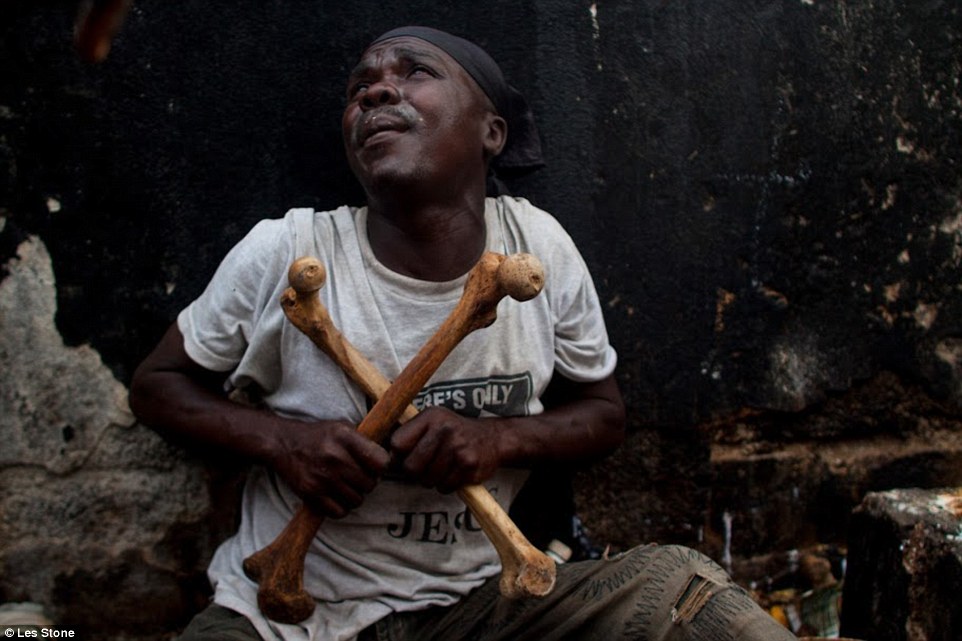
A man sits clutching bones at the Port au Prince cemetery during Ghede, the day of the dead celebrations in Haiti

Symbols of respect for spirits are strapped to tombstones by Haitian people during the Voodoo ceremonies every year


All photos credit: Les Stone